

Learnings from a neuro-friendly basketball clinic
What Made the Adelaide 36ers and TAFE SA Neurodivergent-Friendly Basketball Clinic a Success?
Creating inclusive sporting opportunities doesn’t necessarily require major change. Success comes from thoughtful planning, understanding participant needs and creating an environment where young people feel comfortable to participate.
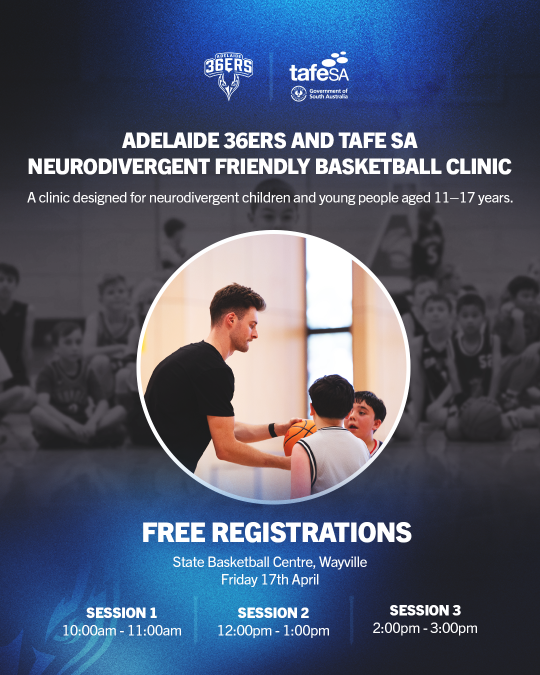
Earlier this year, TAFE SA and the Adelaide 36ers partnered to deliver a Neurodivergent-Friendly Basketball Clinic for young people aged 11-17 years. Supported by SASMA’s Autism and ADHD Keeping Teens Active Program, and attracting approximately 70 participants across three sessions, the clinic demonstrated how small adjustments can make sport more accessible for autistic and neurodivergent young people.
What Worked?
A predictable environment
Participants and families had clear information about the clinic before signing up, while sessions were carefully structured so everyone knew what to expect. This helped reduce uncertainty and build confidence before participants even stepped onto the court.
Participation over performance
The focus was on having a go, developing skills and enjoying the experience. By removing pressure and allowing participants to engage at their own pace, the clinic created a positive environment where everyone could succeed.
Flexible coaching approaches
The Adelaide 36ers coaching team used clear communication, simple instructions and adaptable activities. Rather than expecting participants to fit the program, the program was designed around participant needs.
Strong partnerships
The Adelaide 36ers, TAFE SA and SASMA each brought different expertise to the project, demonstrating how collaboration can help create more inclusive sporting opportunities.
Adelaide 36ers Chief of External Relations & Community Strategy, Ross Wait, said the clinics were a fantastic example of what a genuine partnership can achieve.
“The collaboration between the Adelaide 36ers, TAFE SA and SASMA created real pathways, not just for neurodivergent participants, but for students gaining hands-on experience in inclusive, community-focused sport delivery.”
Planning for inclusion from the start
A dedicated sensory room was available throughout the clinic, however no participants needed to use it. While having the option available was important, the outcome reflected the success of the event design. Clear communication, supportive coaching and a predictable environment helped remove barriers before they occurred.
Why This Matters
Many autistic and neurodivergent young people want to participate in sport but face barriers unrelated to the activity itself. The success of this clinic shows that small, thoughtful changes can make a significant difference.
TAFE SA Chief Executive Adam Kilvert said the clinic aligned with TAFE SA’s strong focus on inclusion and equity.
“For TAFE SA, the clinic was more than sport. It was about inclusion, adaptability and understanding how to continue to create learning environments where every person can thrive and be their best.”
Importantly, the benefits extended beyond participants. TAFE SA fitness students gained valuable real-world experience adapting coaching approaches to meet diverse needs, while families reported increased confidence and engagement in sport.
Mr Wait said feedback from participants and families was overwhelmingly positive.
“We had parents tell us that the clinic had helped their children reconnect with basketball or that it had built their confidence to take part in organised sport. It’s feedback like that which makes it all worth it.”
The lessons learned extend well beyond basketball and can be applied by clubs, schools and sporting organisations across all sports.
SASMA is proud to support sporting organisations to create safe, welcoming and inclusive opportunities that help more young people experience the benefits of sport and physical activity.
Access the Keeping Autistic and ADHD teens active program resources.